

Surose
Surose Karki is an SEO specialist with over five years of experience in optimizing websites for search engines and driving organic growth. He specializes in on-page SEO, local SEO, and content strategy, with a strong focus on improving search visibility, user experience, and conversion performance. With a data-driven approach and deep understanding of search intent, Surose helps businesses build sustainable digital presence through strategic optimization, technical precision, and high-quality content execution.
In today’s digital marketplace, the importance of Search Engine Optimisation (SEO) goes beyond keywords—it drives visibility, credibility, and business growth. From improving your position on search engine results pages (SERPs) to generating consistent organic traffic and enhancing local visibility, SEO is essential for sustainable digital success.
This guide covers what SEO is, why SEO is important for business, and the measurable benefits it delivers—such as cost-effective lead generation, brand authority, and a strong competitive advantage. You’ll also learn about core SEO strategies like keyword targeting, content optimisation, technical SEO, backlink building, and local SEO.
We’ll address common misconceptions, explore how SEO aligns with other digital marketing channels, and outline actionable steps for businesses—whether you’re managing SEO in-house or working with SEO marketing services. When done right, SEO turns visibility into authority—and traffic into real business growth.
What is SEO?
 Search Engine Optimisation (SEO) is the process of improving a website’s visibility in organic search results on platforms like Google and Bing. It ensures your site is discoverable, crawlable, and aligned with both user intent and search engine algorithms.
SEO goes beyond just keywords. It involves a comprehensive strategy to improve how search engines and users interact with your website.
The Four Main Types of SEO:
On-page SEO – Optimises page elements like titles, headings, meta descriptions, content, internal links, and keyword targeting to rank for relevant search queries.
Technical SEO – Enhances performance and crawlability, including mobile optimisation, core web vitals, XML sitemaps, robots.txt, and indexation.
Off-page SEO – Builds authority through backlinks, digital PR, and brand mentions from trusted sources.
Local SEO – Improves local rankings by optimising Google Business Profiles, citations, and appearing in the Local Pack for geo-targeted searches.
Understanding what SEO is and why it matters for your business is the first step to long-term success. Unlike one-time tactics, SEO is a scalable, evolving strategy that grows with your digital presence.
Why SEO is Essential for Business Growth in the Digital Age
As consumers shift to mobile, voice, and multi-channel platforms, Search Engine Optimisation (SEO) has become a key driver of business growth. In today’s digital-first world, search engine visibility isn’t optional—it’s a competitive necessity.
Modern buyers rely on search engines to find, compare, and choose businesses. SEO places your brand where high-intent users are actively searching, turning organic visibility into real leads, sales, and engagement. Unlike paid ads that stop when budgets run out, SEO offers a cost-effective, long-term growth channel.
Across industries, businesses—from startups to enterprises—recognise the importance of SEO in digital marketing. It not only increases visibility but also builds credibility, brand trust, and customer loyalty. As algorithms evolve to reward user experience and relevance, SEO ensures your brand stays visible and competitive.
Ignoring SEO means losing traffic to competitors and limiting the ROI potential of your digital presence.
The Benefits of SEO for Business
A strong SEO strategy delivers long-term value—from brand visibility to sustainable customer acquisition. Understanding these advantages reveals why search engine optimisation is not a luxury but a strategic must for modern businesses.
Increased Visibility and Discoverability
One of the top benefits of SEO is improving your site's position on search engine results pages (SERPs). Ranking for relevant keywords boosts discoverability, driving awareness and engaging customers at key stages of their buying journey.
Cost‑Effectiveness and Long-Term ROI
SEO offers a cost-effective alternative to paid ads. It attracts qualified traffic without ongoing ad spend, lowering customer acquisition cost (CAC) and improving lifetime value (LTV). Over time, SEO becomes one of the best-performing channels for business growth.
Builds Brand Authority & Trust
High-ranking pages signal credibility. SEO aligns your content with search intent, earns trusted backlinks, and improves site performance—building brand authority and reinforcing trust. Technical SEO and UX optimisations further enhance professional perception.
Competitive Advantage
In crowded markets, business search engine optimisation helps you outrank competitors and attract more qualified leads. Targeting high-intent search terms lets smaller businesses compete with larger brands—even on limited budgets.
Consistent Flow of Organic, High-Intent Traffic
Unlike paid campaigns that fade with budget cuts, SEO delivers a steady stream of high-intent traffic. These users are actively searching for what you offer, increasing the chances of engagement, conversion, and long-term loyalty.
Local Visibility for Small Businesses
Local SEO helps small businesses capture nearby customers through Google Business Profiles, map packs, and geo-targeted keywords. It boosts local visibility, store visits, and helps you compete effectively at the community level.
How SEO Supports Different Business Models
Search Engine Optimisation (SEO) isn’t one-size-fits-all—it adapts to your business model, scale, and goals. Whether you’re a local store, a global e-commerce platform, or a B2B service provider, SEO can be tailored to meet your specific digital needs.
Small Businesses vs. Enterprises
For small businesses, SEO is a cost-effective way to improve visibility and compete locally. Tactics like Google Business Profile optimisation, local citations, and review management help attract nearby customers and build trust.
Enterprise SEO requires scalable solutions, including advanced site architecture, cross-domain management, and governance across teams. The focus is on maintaining authority, international SEO, and high-level performance.
B2B vs. B2C Models
SEO for B2B emphasises long-tail keywords, educational content, and lead generation through whitepapers, guides, and case studies. It supports longer sales cycles and complex decision-making.
B2C SEO targets quick conversions. It involves optimising product pages, enhancing UX, and using structured data to improve visibility and drive action across consumer touchpoints.
E-commerce vs. Service-Based Businesses
E-commerce SEO focuses on crawlable category structures, product optimisation, schema markup, and internal linking to ensure search visibility at scale.
Service-based businesses use SEO to build authority with localised content, SEO blogs, and conversion-focused landing pages. Long-form content and customer success stories help establish trust and rank for valuable informational queries.
Local Brick-and-Mortar vs. Digital-Only Brands
Local businesses rely on local SEO—optimising for geo-specific keywords, directories, and maps to drive foot traffic.
Digital-only brands focus on national or global reach with aggressive keyword strategies, content scalability, and integration with other digital marketing services.
Strategic SEO Components That Drive Business Success
Effective SEO optimisation involves multiple components working together to boost visibility, attract high-intent traffic, and drive measurable ROI. From keyword targeting to technical SEO and authority building, each element must align with business goals.
Targeting the Right Keywords for Business Goals
A solid keyword strategy ensures your content appears in searches aligned with user intent and business objectives. Targeting transactional, informational, and local queries helps attract the right audience at every funnel stage. Mapping keywords to content ensures relevance and maximises conversions.
Content Optimisation That Ranks and Converts
Content optimisation goes beyond keyword use. It involves structuring pages with optimised headings, meta tags, internal links, and CTAs that solve user problems and encourage action. Delivering value builds topic authority and supports both rankings and conversions.
Technical SEO for Site Performance & Crawlability
Technical SEO ensures your site is fast, mobile-friendly, and easy to crawl. Core elements include HTTPS, page speed, canonical tags, XML sitemaps, and robots.txt. A technically sound site improves crawlability, indexation, and overall ranking potential—especially for large or complex websites.
Backlinks and Authority Building
Backlinks signal trust and help establish domain authority. Acquiring links through digital PR, guest posts, and thought leadership improves rankings and drives referral traffic. High-quality backlinks increase visibility and position your brand as a trusted source.
Local SEO for Brick-and-Mortar Businesses
Local SEO connects your business with nearby customers. Optimising your Google Business Profile, managing citations, and encouraging reviews help you appear in the Local Pack. Consistent NAP details and localised content increase foot traffic and community engagement.
Common Misconceptions & SEO Challenges
While the importance of SEO is clear, many businesses approach it with unrealistic expectations or outdated beliefs. Addressing these common SEO challenges is key to building an effective, long-term strategy.
SEO is a One-Time Project
Many assume SEO is a one-off task. In reality, SEO is ongoing—shaped by algorithm updates, competition, and evolving user behavior. Long-term success requires continuous content optimisation, technical audits, and performance monitoring.
Keywords Are Everything
While keywords matter, SEO today focuses on user intent, content quality, and semantic relevance. Relying solely on keyword placement leads to poor UX and potential penalties. A strong SEO content strategy includes value-driven content, link building, and technical alignment.
More Content = Better Rankings
Publishing more content doesn’t guarantee rankings. What matters is relevance, quality, and SEO optimisation. Thin or repetitive content can hurt performance. Focus on useful, well-structured content that meets user needs and reinforces topical authority.
Technical SEO is Just 'Fix Errors'
Technical SEO isn’t just about fixing broken links—it’s about improving crawlability, site structure, speed, and mobile experience. A solid technical foundation helps search engines access, index, and rank your content effectively, supporting every other SEO element.
The Relationship Between SEO and Other Digital Channels
Search Engine Optimisation (SEO) is not a standalone tactic—it strengthens every aspect of your digital marketing strategy. When integrated properly, SEO supports paid advertising, content marketing, social media, and email campaigns, boosting visibility and ROI across all channels.
SEO vs. Paid Advertising
Unlike paid advertising, which delivers short-term results, SEO builds long-term visibility and trust. Organic rankings persist without ongoing ad spend. Paid search data—like high-converting keywords—can inform your SEO strategy, while SEO reduces reliance on paid traffic.
SEO and Content Marketing
SEO and content marketing work hand in hand. SEO drives traffic to content through keyword targeting and structure, while content powers SEO with value and relevance. Optimised blogs, landing pages, and guides attract leads and build brand authority.
SEO and Social Media
While social media isn’t a direct ranking factor, it amplifies SEO by expanding content reach, driving referral traffic, and generating engagement signals that support visibility. SEO ensures content is discoverable; social platforms help it get seen and shared.
SEO and Email Marketing
Email marketing complements SEO by promoting optimised content to an engaged audience, increasing traffic, session duration, and return visits. This helps boost behavioral signals that influence search performance and conversions.SEO marketing acts as the core of a unified digital ecosystem—shaping PPC keyword strategy, guiding content development, improving UX, and driving multi-channel synergy. Businesses that treat SEO as a cross-functional asset gain a stronger, more scalable online presence.
The ROI Timeline of SEO
One key aspect of Search Engine Optimisation (SEO) is understanding its ROI timeline. Unlike paid advertising, which delivers immediate but short-lived results, SEO is a long-term strategy that compounds over time—generating more qualified leads at a lower cost.
- Months 1–3: Foundation Phase
Initial efforts focus on technical SEO audits, keyword research, and fixing crawlability issues. This stage builds the framework for future growth, though visible results may be limited.
- Months 4–6: Early Growth
Sites begin to gain traction in search results. Targeted pages may start ranking and attracting organic traffic, though conversions can still vary depending on content quality and industry competition.
- Months 6–12: Compounding Returns
SEO efforts start showing consistent gains—ranking for broader keyword clusters, attracting high-intent traffic, and generating measurable leads and conversions. This is when SEO ROI becomes more evident.
- Ongoing Impact
Factors like content quality, site performance, niche competitiveness, and domain authority affect the timeline. But unlike paid ads that stop when the budget ends, SEO continues to deliver long-term value through lasting visibility and sustained traffic.
Businesses that view SEO as a strategic, ongoing investment—not a quick fix—are best positioned to realise its full potential for cost-effective lead generation and scalable growth.
Implementing SEO: Actionable Steps for Business Owners
Executing a successful SEO strategy requires consistent effort—not just one-off tasks. Whether you’re handling DIY SEO or seeking SEO marketing services, the key is to align efforts with clear goals and track performance.
DIY SEO Tips for Small Businesses
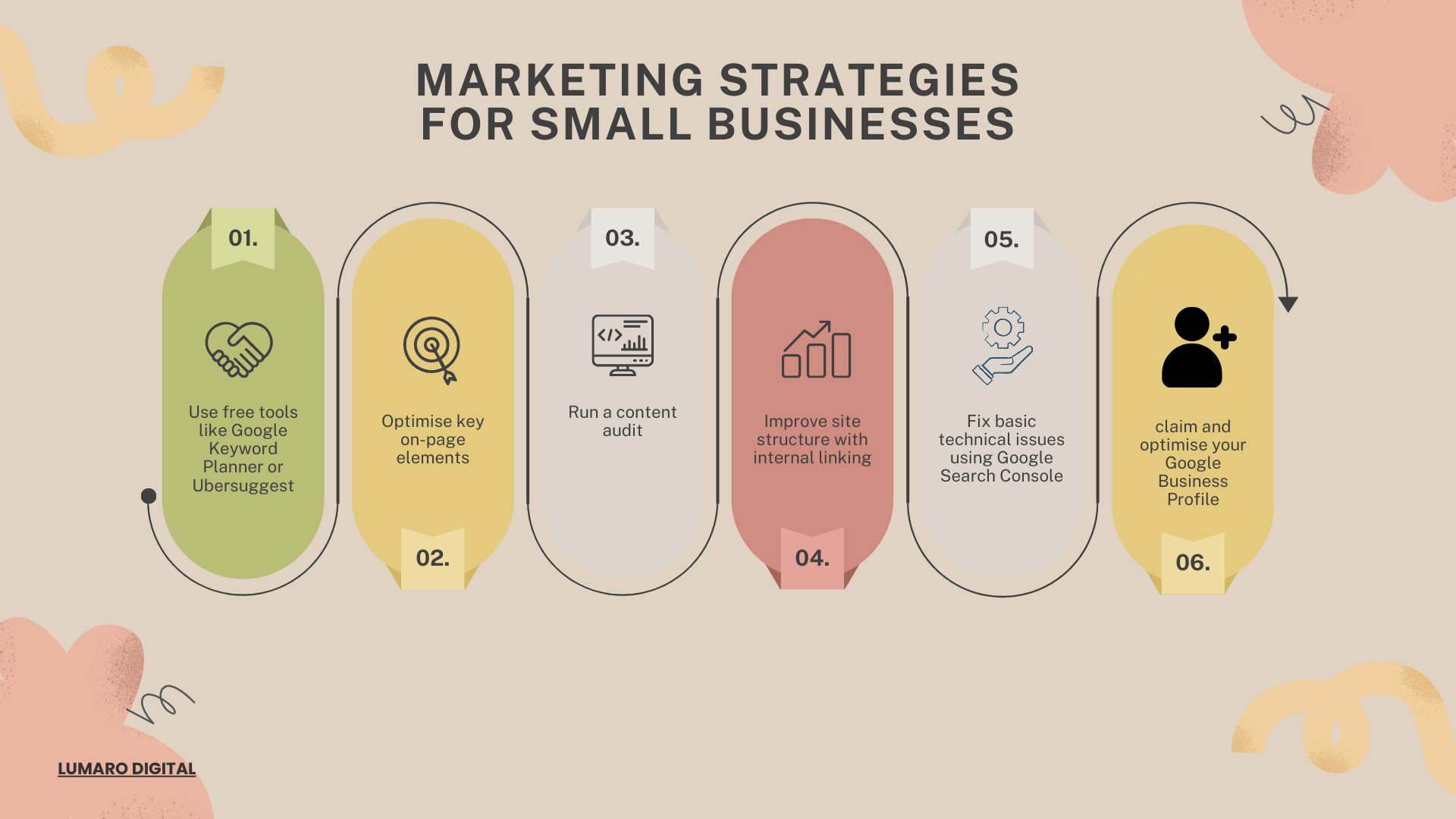
For those with limited budgets, SEO for small business can still be effective:
- Use free tools like Google Keyword Planner or Ubersuggest to find relevant keywords.
- Optimise key on-page elements: titles, meta descriptions, headings, and URLs.
- Run a content audit: remove thin pages, focus on value, and create blog content that answers real user queries.
- Improve site structure with internal linking.
- Fix basic technical issues using Google Search Console and PageSpeed Insights.
- For local reach, claim and optimise your Google Business Profile to appear in the Local Pack.
This approach builds a solid SEO foundation with minimal upfront cost.
rketing services, the key is to align efforts with clear goals and track performance.
When to Hire an SEO Agency or Consultant
Consider hiring an SEO consultant or agency if:
- You face technical SEO challenges, site migrations, or competitive markets.
- You lack time or in-house expertise.
- You need a full-service strategy, including audits, content planning, link building, and performance tracking.
Choose agencies that prioritise business outcomes—like traffic, leads, and conversions—not just rankings. Ask for proof (case studies, client results) and ensure they follow current best practices.
Whether in-house or outsourced, treat SEO as an ongoing growth investment—not a one-time fix.
Conclusion
The importance of SEO for business goes beyond visibility—it’s about driving growth, building trust, and staying competitive in a digital-first world. From improving search engine rankings and generating qualified traffic to enhancing user experience and boosting brand authority, SEO is a powerful, long-term investment.
Whether you’re a local shop or a global brand, understanding and implementing the right SEO strategies—technical, content, and local—can help you scale efficiently and reduce reliance on paid channels.
Investing in business SEO today positions your brand for sustained success tomorrow.
FAQs
Is SEO worth it for small businesses?
Yes. SEO for small businesses can drive consistent local traffic, improve visibility, and compete with larger brands—often without major ad spend.
How long does it take for SEO to show results?
Typically, SEO ROI starts appearing within 3–6 months, but results vary based on competition, site quality, and keyword strategy.
What’s the difference between SEO and paid advertising?
Paid advertising delivers immediate traffic but stops when your budget ends. SEO builds lasting visibility, lower long-term costs, and higher trust.
Can a brick-and-mortar business benefit from SEO?
Absolutely. Local SEO helps physical businesses rank in maps, appear in “near me” searches, and attract nearby customers.
Do I need to hire an SEO agency or can I do it myself?
You can start with DIY SEO if you have time and basic knowledge. For complex needs, hiring an SEO expert or agency ensures faster, scalable results.
What are common SEO mistakes businesses make?
Common issues include: treating SEO as a one-time task, overusing keywords, ignoring technical SEO, and publishing low-quality content.